home ac unit not running

I need help troubleshooting Rheem RAHE-036JAS, Armstrong G1N80AU125D20C-1, Honeywell ST9160B 1068 Board, Honeywell SV9520H 8034 Gas Valve. About a week ago, AC and Heat were working fine. After power failure (could be coincidence), AC problem, Heat working fine. Symptom: No Inside blower. Outside AC Fan and compressor appear to be working fine. Inside blower will not run. Refrigeration line from AC to house will eventually begin to frost so I believe everything outside is OK. Thermostat: Originally had "Mechanical" AC/Heat thermostat (Lux T101143/PSM40). With Thermostat Heat/Off/Cool switch set to Heat, and Fan AUTO/On switch set to AUTO, Heat runs normally: Inside Blower/Fan is off, gas valve turns on, furnace ignites. After some delay, Blower starts and runs normally. Then, set Thermostat Heat/Off/Cool switch to off. Gas valve turns off, Blower continues to run for a while, then Blower shuts off. With Thermostat Heat/Off/Cool switch set to Off, and Fan AUTO/On switch set to On, Blower runs normally (continuous).
With Thermostat Heat/Off/Cool switch set to Cool, and Fan AUTO/On switch set to AUTO, outside AC fan and compressor start and run normally, inside Blower never starts. While outside AC fan and compressor are running, turning Fan AUTO/On switch to On has no effect (inside Blower remains off). Discovered that Thermostat Fan AUTO/On switch seemed "loose". With covers removed from Thermostat and baseplate exposed, fan switch operation was intermittent. I didn't suspect the Thermostat was responsible for the AC No-Blower issue but since the Fan AUTO/On switch was intermittent, I replaced the Thermostat with a new digital thermostat (Honeywell RTH2300 B). With new Thermostat, no changes observed... Heat still working, and Fan/Blower (alone) still working, and No-Blower with AC On. AC outside fan and compressor still appear to be working fine. At this point, I have completely disconnected the ST9160B 1068 Board, and have marked and removed all wires, and have inspected it for any obvious issues but it appears to be fine.
My thought is to thoroughly test the ST9160B 1068 Board. For example: reattach power, jumper Y to R and check for operation of on board relay, etc ... To do this there may be various sensors/interlocks that need to be checked/bypassed, so I'm looking for a procedure that will allow all this to be checked. If you feel I am looking in the wrong place, please let me know. Here are some pictures of the wiring diagram/schematics from inside the furnace door: And here is a picture of the Honeywell ST9160B 1068 Board: I reinstalled the ST9160B (Fan control) board and reattached all the wires except the R - C - W - Y - G wires which I left disconnected. I verified the blower/fan wiring and it was as Tester101 said: A Black wire was on the COOL terminal. The Black wire runs the blower on HIGH speed. A Blue wire was on the HEAT terminal. The Blue wire runs the blower on MEDIUM speed. A Red wire was on the M1 terminal. The Red wire runs the blower on LOW speed (lowest speed).
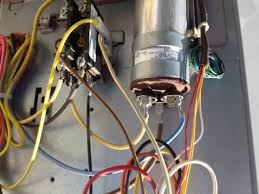
A Yellow wire was on the M2 terminal but this wire was capped at the other end (non-functional). The wire is used for fan motors that have a MEDIUM-HIGH speed... mine does not. The M1 and M2 terminals are not connected to anything on the circuit board.
ac dc unitThey only serve as a place to "Park" the blower motor wires that are not used.
home ac unit problems First I placed a jumper from G to R and depressed the interlock switch to allow power to the system.
ac unit infoAfter a very short delay (about one-half to one second), the inside blower/fan started up. I checked the voltage on the HEAT terminal and found 120 VAC. Next I placed a jumper from Y to R (now Y&G are jumped to R). At this point, the blower, which was running from the HEAT terminal (at MEDIUM speed), turned off.

I checked the voltage on the COOL terminal and found 0 VAC. To verify that the motor motor HIGH speed was functioning, I disconnected the Black and Blue wires, and connected the Black wire to the HEAT terminal, and placed a jumper from G to R. After a very short delay, the inside blower/fan started up. From the sound, I could tell that it was running noticeably faster. From all of this, it seems the ST9160B Fan control board is failing in the COOL mode.One of the best things in summer is to walk into your home and feel the cool blast of air coming from your air conditioning unit. The problem with air conditioning units is that buying and maintaining them can be costly and not very pleasurable. There are some simple mistakes that you could be making with your air conditioning system that will reduce the efficiency of the air coming through. These mistakes can lead to higher energy, and large repair or replacement costs. Here are the top 5 things that you should avoid doing with your air conditioning system to save energy, and repair costs.

One size does not fit all when it comes to picking an air conditioner unit. If your unit is too large, it will cycle off and on. This cycling of the system can lead to wild and unwanted temperature changes, and a lot of energy being used. If the air conditioning unit is too small, it isn’t able to adequately cool the space. It will also struggle to keep up with the cooling demands, and the unit will wear out much more quickly than if it was the right size. If an air conditioning unit is too large or too small, you will have to shell out a lot of money for repairs, or need to replace the whole unit in the near future. You need to look for an air conditioning unit that is the correct size and can deliver correct cooling for your home. You should make sure that your contractor measures your square footage, the layout, and gets an accurate calculation for the load that is needed, and the type of insulation used in your home, before he installs the unit. Changing the air filter on most air conditioning units is fairly easy and inexpensive, however most homeowners with air conditioning units will not do this simple task.
The air filter is designed to prevent dust and another debris from the outside from entering your home, via the air conditioning unit. Over time, the air filter can become clogged. The time period between the times that you should change your air conditioning unit’s air filter will depend on a few things. For many unit, a new air filter will be needed every 2 to 3 months. If you have a pet, run the unit for 6 or more months a year, if you or a person in the house hold smokes inside, or there is construction near or inside the house means that you should be changing the air filter about once a month. Not changing the air filter can lead to expensive energy costs, and repairs to the air conditioning unit that could have been avoided. In some cases not changing the air filter will lead to freezing inside of the air conditioning unit. Having your air conditioning running all day wastes a lot of power, and over time can decrease the efficiency of the unit. The air conditioning unit should be turned off when you are not at home.
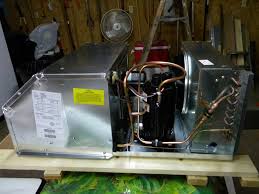
You could also turn up the thermostat when you leave the house, if you have pets to keep the home cool, but not stress the unit. Most air conditioning units will only take a few minutes to cool down a house, so there is little point to leaving the unit on during the times that you are gone. After a long time of not being used, your air conditioning unit may not be in working order, or may not be working properly when you turn the unit back on. Mold is able to grow inside of the unit, and cause the unit break down. To keep your air conditioning unit in working order, and protect the air quality inside of your home, try to run the air conditioning for a few minutes each day to make sure that the unit is still working, and lower the chance of mold growth. The inside of your home can also be damaged by not running the air conditioning. Many homes become like an oven, and over time, the temperatures can impact the wood that make up the doors, flooring and cabinets that many homes have.

If you are going to be gone for a long time turn up the thermostat on the air conditioning unit, and leave the unit on. If the unit has a timer, use that to cool the house during the day, and turn off at night to save power. Many people who own air conditioning believe that turning the thermostat to the lowest setting will cool the room faster. In many cases, the system will just skip the temperature that you set, and will waste power in the process to cool the room to a lower temperature than it was set for. For most air conditioning units, this huge change in temperature setting can cause the unit to work much harder, and can damage the unit over a long period of time. As a general rule, the recommended temperature is the highest temperature that you are comfortable with. For most people, this range is between 76 and 79 degrees Fahrenheit, but this varies from person to person. Every degree that your air conditioning unit is set lower than what is normal equals about 7% more power consumption.