ac unit running not cooling
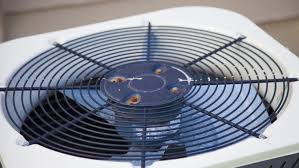
We all attach a utility with every object we buy. One of the basic things we expect from an air conditioner is that it should give good cooling. Faster or slower, but it should cool well in order to get the temperatures down to comfortable levels. When it does not do so, we do not derive utility from the product and want to replace it. But these questions arise in several minds: “Why is it that my AC which was cooling well till a few months back is not cooling well now?”, “I bought a new AC but why is it not cooling well?” or “This AC used to work really well a few years back but is ineffective now”. There can be several reasons for the same, some of which can be technical faults as well. But here we would try to explain some of the reasons, which may not be fault in the AC itself. One of the common complaints from people living in northern part of India during peak summers is that the AC is not cooling effectively or the compressor is not working. Unknowingly while installation of the AC, people do not realize that the outdoor unit (in case of split AC) or the outer part of the AC (in case of window AC) is directly facing the sun.
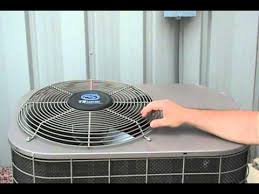
All ACs have an optimum operating temperature (ambient or surrounding temperature) at which they can work most effectively. If the temperature increases beyond the optimum temperature, the efficiency of the air conditioner goes down and it can also reach a stage where the compressor stops working completely. At lower efficiency, it can also consume more electricity than that mentioned on the BEE label. Typically numbers on BEE label are in test conditions.: This happens because the job of AC is to take heat from inside the room and throw it outside. But if the heat outside itself is quite high, then it is not able to do its job properly. Air Conditioners are designed to work at a certain optimum ambient temperature and beyond that they stop working. How much is optimum temperature? For most ACs it is about 46-48 degrees. Beyond which they can become less effective or may even stop working. These days some brands have models that can handle up to 52 or 54 degrees. Solution: The best thing that you can do is to avoid installing an AC in such a way that it faces direct sun or is in a place where there is lot of heat.
And it is not necessary that heat can happen only in a city where the temperature goes high. It can happen anywhere if the ODU is in closed hot place. Also one can even use an AC with optimum temperature of 46 in a place where the temperature goes high. It would just need a place where the surrounding temperature is low. This can be achieved by placing plants around the AC or by pouring some water on it occasionally (although it can be cumbersome), or by any other creative idea. One of the common mistakes people make is that they buy AC just based on their budget and not based on the requirement of the room. A small AC in a huge room will always find hard to cool the room in peak summers. Thumb rules for sizing ACs do not work always and one has to look at several parameters while sizing air conditioners. Certain cities are hotter in summers, which mean they require more cooling for the same size room as compared to cities where temperature is less. Some cities are more humid than hot and so the cooling requirement is less, but what is more important is humidity removal.

Thumb rule of 1 ton for 100 sq ft (most commonly used thumb rule) does not work always and one should make sure that proper sizing is done before buying AC so that there are no regrets after the purchase. Yes aging not only impacts humans, but appliances too.
split ac units for mobile homesWith time efficiencies of most appliances come down.
gas furnace ac unitsCooling of an air conditioner reduces with time, or I must say with time it takes more electricity to give the same amount of cooling.
air conditioning fan on autoAs per ASHRAE (American Society of Heating, Refrigerating and Air Conditioning Engineers) an air conditioner reduces its efficiency by 7% in the first year, 5% in the second year, 2% every year in the following years, and this reduction peaks somewhere between 20-30% depending on how well the air conditioner is built.
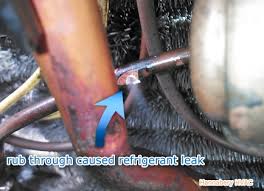
If the AC is 20 yrs or older, it can go down up to 40%. (Source: “A Survey of Refrigerant Heat Transfer and Pressure Drop Emphasizing Oil Effects and In-Tube Augmentation;” ASHRAE Winter Symposium of 1987; Schlager, Pate, and Bergles.). This means that the older the AC, lesser is the efficiency. So it is not only the improvements in energy ratings by BEE (Bureau of Energy Efficiency) that leads to lowering of star rating for your AC, but also the de-rating factor which can lead to more electricity consumption than mentioned on the BEE label. Some manufacturers have models that have reduced de-rating, but no one has been able to completely eliminate it. It is not always a technical fault that may lead to less cooling or an ineffective AC. One should make sure that the sizing is done properly and the AC (ODU/external part) is not placed in a very hot environment, as it reduces its efficiency and leads to improper cooling. Window Air Conditioner: Running but not cooling If the window air conditioner's compressor and fans are running but the air conditioner isn't cooling, possible causes include a failed compressor or the lack of refrigerant due to a leak in the sealed system.

If the compressor isn't running but the fans work, the start relay or compressor might have failed. A defective electronic control board or control thermostat could prevent the window air conditioner from cooling. See the repairs listed below for help with correcting this problem. These repairs may help solve your Window Air Conditioner problem: Replace the window air conditioner compressor The compressor is a pump that compresses the refrigerant—Freon—that’s sealed in the window air conditioner. If the compressor doesn’t run when activated, have a refrigerator service technician replace it; by law, an EPA-licensed technician must do this repair because it involves Freon. Replace the window air conditioner control thermostat Some window air conditioners have an electro-mechanical thermostat instead of an electronic control board to control the on/off cycling of the compressor and fans. Replace the thermostat if it fails to control the compressor and fans properly.

Replace the window air conditioner electronic control board The electronic control board regulates the compressor, evaporator fan and condenser fan in the window air conditioner. If the electronic control board doesn’t activate those components properly, replace the control board. How to Replace an Electronic Control Board in a Window Air Conditioner Replace the window air conditioner evaporator thermistor The evaporator thermistor is a temperature sensor that is mounted on the evaporator. It monitors the temperature of the evaporator to detect excessive frost on the evaporator. The thermistor communicates that temperature to the electronic control board through a wire harness connection. If the evaporator frosts up, the electronic control board will detect the frost according to the temperature communicated through the thermistor. If the thermistor is defective, the electronic control will not properly detect and eliminate the frost. Replace the evaporator thermistor if it doesn’t properly detect the evaporator temperature.