types of hvac work

HVAC careers can be rewarding both in the satisfaction of helping people and also financially. This can be a very stable occupation because we use machines to keep us warm in the winter and cool in the summer. As in the case of any machine, over time parts will wear out and require replacement. If you are prepared to accurately diagnose and repair problems with heating and cooling units, you will be employed. There are countless stories of people that have started in the industry and, after gaining experience, moved on to start their own heating and air conditioning business.Today, there are more opportunities than ever before. With the rising energy costs, more and more people are looking for ways to lower their utility bills. It is a natural extension of the hvac industry to help people to do this. There are many opportunities such as through weatherization, solar, wind, etc. There are two basic types of positions in the hvac industry which are commonly referred to as service technicians (techs) and installation technicians (installers).
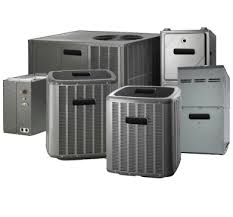
In most cases, a service technician will also be required to perform the duties of an installer from time to time.**HOT TIP** In general, a job as a service technician is usually more stable (less seasonal) than the installation only jobs. In the United States, the process usually begins with a formal apprenticeship program, simple on the job training, or a formal training program at a college. This can be as easy as being a helper for an experienced installer. For positions as a repairman, the process usually begins with either a college course or an apprenticeship. In many companies, the service technician positions are given to experienced installers who would like to advance their career.A part of the initial process of getting hvac jobs, is becoming certified to buy and handle refrigerants. This is required by the Environmental Protection Agency (EPA) to comply with the requirements of section 608 of the Clean Air Act. This simply involves some personal studying and taking a test that is administered by an authorized agency.

There are basically five types of certification: 1. automotive: This allows you to work on air conditioners that are part of automobiles. 2. Type I: This allows you to work on small appliances. 3. Type II: is for high pressure or very high pressure systems. 4. Type III: is for low pressure systems. 5. Universal: This certifies you to work on all systems containing ozone depleting refrigerant except for vehicles.For hvac careers in residential or commercial buildings, it is best to obtain universal certification. Most heating and air conditioning companies will not accept anything less. **NOTE** These requirements are for systems that contain ozone depleting chemicals (CFC's or HCFC's). These are refrigerants such as R-22 or R-12. The new refrigerants such as R-410a are non-ozone depleting and therefore are not covered by the Clean Air Act.There are other forms of certification that are not related to the use of refrigerants. These requirements vary from state to state and country to country.
There are some nationwide programs such as NATE, etc. but they are voluntary and really not necessary. Many states require licenses for contractors and some require licenses for the individual mechanics.**NOTE** In the past, many contractors/business owners have accepted people for entry level positions without requiring them to be certified beforehand. This is becoming pretty rare now but, if you can find someone looking for an apprentice, they may pay for your training and certifications.
window ac units low profile The next step in the process of starting your hvac career, is self study.
high efficiency split ac unitsTo be a good hvac mechanic, you must have a working knowledge of electricity and plumbing as well as the operation of heating/cooling equipment.
my ac unit makes noise
This can be obtained through college courses, studying manufacturer's product information, and simple hands on learning. **HOT TIP** The best college HVAC training includes classroom instruction by experienced industry professionals combined with hands on training.You can also watch our maintenance and troubleshooting videos. You can get the advantage of our years of experience as a technician without taking 15 years. Now that you have made the decision to start an hvac career, you will need some tools to begin your new job. In order to start off on the right foot, you can peek inside our toolbag. As they say, you don't get a second chance to make a first impression so show up with the proper tools.No membership or credit card requiredHvacRemodelingNo thanks, I'm not quite ready.Also known as: HVAC Service Technician, Heating Ventilation and Air Conditioning Technician, Heating Ventilation Air Conditioning Technician, Heating Ventilation Air Conditioning Service Technician. What is a HVAC Technician?
What does a HVAC Technician do? What is the workplace of a HVAC Technician like? Heating, air conditioning, and refrigeration mechanics and installers—often referred to as HVAC technicians—work on heating, ventilation, cooling, and refrigeration systems that control the air quality in many types of buildings. They mostly work in residential homes, schools, hospitals, office buildings, or factories. Their worksites may be very hot or cold because the heating and cooling system they must repair is broken. Working in cramped spaces is common.The file or script requested was not found on this server. If you typed in this URL by hand, please verify that you have the correct spelling and try again. Between new construction, and the increasing need to upgrade or replace heating and cooling systems, HVAC jobs are in very high demand. If you’re interested in this career, here are four career options to know about. In order for a heating, cooling, and ventilation system to work properly, it needs the right parts.
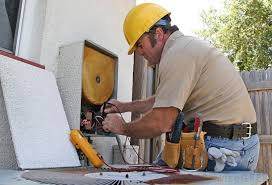
That’s where a fabricator comes in. In this HVAC job, workers assemble components such as ducts and their fittings using the measurements given to them by customers or contractors. These day laborers can use hand and power tools to cut, weld and shape sheet metal into these parts or work robotic machinery to get the job done. No matter how they create these components, people working in this HVAC job have to be able to work on multiple orders and meet their deadlines. To become a fabricator, you need accreditation from a trade school or a formal apprenticeship program. As the most most common HVAC job, technicians do a lot of the hands on work when it comes to heaters and air conditioning units. These workers read and interpret blueprints to install and connect these systems to air ducts, water lines, and other critical components. Once installed, they may be called back to do inspections and run tests to make it’s working efficiently. In the event that it isn’t, HVAC techs are responsible for troubleshooting the problem and making the necessary repairs.
Another type of HVAC job to consider, especially if you’re looking to do something other than fabrication or maintenance is sales. You can use your expertise to help customers purchase the best HVAC system for their facility and budget. These salespeople can work in distribution plants and HVAC shops or travel to customers’ businesses and homes to do consultations. Other responsibilities may include gaining new customers, negotiating projects, and managing others. People working this HVAC job need to have great customer service skills, be familiar with various HVAC systems, and be a self-starter. As for formal education, you’ll need a bachelor’s degree. If you’re more of a designer at heart, then this is the HVAC job for you. HVAC engineers are responsible for creating the plans that fabricators and installers use. They often work with teams that include the clients and technicians to create new HVAC systems for residential and commercial projects. This HVAC job may also call for the redesign of existing systems.