types of commercial ac units
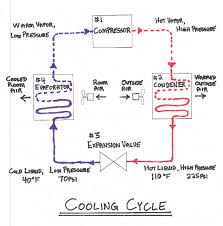
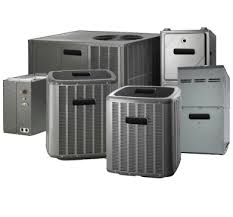
We are here to help you stay smart on today’s heating and cooling solutions. There are many types of specialized HVAC technology used in commercial buildings and these are often much different from those terms used in common residential applications. We thought it would be helpful to provide a summary list of the various types of commercial air conditioning systems used in the US today. Reviewing this list prior to or during conversations with your HVAC contractor might allow you to be more informed and less confused about the solutions being proposed for your commercial air conditioning needs. Variable Air Volume (VAV) – Single duct air system with varying airflow. Supply air temperature can be controlled based on heating/cooling demand or reset based on outside air temperature. VAV systems may include a terminal reheat box for better humidity and temperature control. Terminal fan powered boxes may be used for better zone control. Constant Air Volume (CAV) – Single duct air system with constant airflow.
Supply air temperature varies based on a call for heat or cooling from the thermostat. Variable Refrigerant Flow (VRF) – A heat-pump system that uses refrigerant as the heating and cooling medium. One condensing unit can serve multiple evaporators to condition the space. The heat recovery option allows the evaporators connected to the same condensing unit be in heating and cooling mode at the same time. This reduces the energy consumption required to heat and cool the spaces because less energy is wasted to the outdoors or condenser water loop. Chilled beams (active and passive) – A chilled beam is the terminal unit that conditions the space. The chilled beam includes a heating and cooling coil. Active chilled beams have air (typically ventilation air) introduced into the chilled beam to increase the capacity by increasing the induction of the unit. Passive chilled beams don’t have air introduced into the unit and heats and cools based on induction only. Chilled beam systems save fan energy because of the reduced airflow required.
Humidity and cooling water temperature must be controlled to avoid condensation. Heat Pump (water to water, water to air, air to air) – Heat pumps can heat a source of heat or cooling. Heat pumps move energy from one location to another and the refrigeration process reverses between heating and cooling modes. Air source heat pumps use the outside air as its heat source in the heating mode and its heat sink in the cooling mode. Fan Coils (FCU) and Blower Coils (BCU) – A terminal unit which is capable of providing heating and/or cooling to a zone or a space. Ventilation air is typically provided by a dedicated outside air system which supplies outside air directly to the room or to the return ductwork in a ducted system. A fan coil unit contains an internal fan, heating coil and/or a cooling coil. Fan coil units can be noisy because the fan is within the space or close to the space. Unit Ventilators (UV) – Unit ventilators are typically exposed to the space where it is providing ventilation air and/or conditioning.
Unit ventilators consist of an internal fan, and a heating and/or cooling coil. Ventilation air is typically provided by the unit ventilator and can be mixed with return air prior to conditioning the supply air. Ceiling Fans – Ceiling fans can used as a stand-alone device to improve comfort and with an HVAC system to improve the comfort in a space.
best auto ac repair in phoenix Displacement Ventilation – An air distribution system that provides cool air into a space at a low level and at a low velocity.
how much is an outdoor air conditioner unitThe supply air is introduced near the floor level and rises into the thermal plumes that are formed by heat sources.
what size ac unit do i need in floridaThe benefits of this system energy efficiency and improved comfort.

The system saves energy because ventilation air can be reduced per ASHRAE 62.1 because of the low supply height and high return height. The system improves comfort because it removes contaminants associated with heat sources. Geothermal – Geothermal systems use the earths internal energy to transfer heat. Heat transfer for a geothermal system is typically completed through a ground loop, pond/lake loop or a well loop. Hybrid geothermal – A hybrid geothermal system consists of a typical geothermal well field and a heating/cooling element to offset the peak thermal load difference between the heating and cooling season. In cooling mode, typically a fluid cooler, cooling tower or heat pump is used to provide additional cooling for the system. In the heating mode, typically a boiler or heat pump is used to provide additional heating for the system. A hybrid geothermal system can lower the initial cost of the system by reducing the well field size with a minimal reduction in energy efficiency.
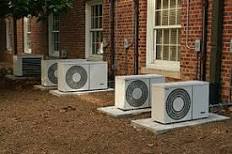
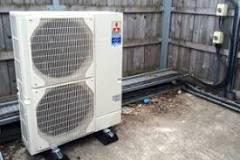
The cost reduction and energy efficiency difference varies depending on the location, building load and amount of extra capacity that is required.Air conditioning is used in most commercial properties, ranging from small shops and cafés to large office buildings and public spaces.To meet these diverse applications, air conditioning systems have different heating and cooling capacities and come with various setups and layouts.There are almost infinite configurations within each category, but the main types of commercial air conditioning are:They all use the same basic technology and identical wall- or ceiling-mounted indoor units. However, they have very different applications, so it’s important to find out which is best for you.Single splits are the most affordable type of air conditioning system and suitable for use in small commercial buildings. They provide heating and cooling to individual rooms, making them ideal solutions for small offices, shops, cafés and server rooms.They can also be used in combination to serve larger spaces and multiple rooms.
The only downside is that you need enough external space to have one outdoor unit for every indoor unit.However, there are advantages to doing it this way. Firstly, it’s often cheaper than installing a central system, and, as each system is self-contained, if one unit breaks down, the others remain fully functional.Even though they’re the cheapest type of air conditioning, single splits are effective and energy-efficient systems. Their versatility makes them great for all kinds of applications and they’re extremely popular with small businesses.Multi-splits work in exactly the same way as single splits but, depending on the model, you can connect up to nine indoor units to one outdoor unit. They’re most frequently used in places like restaurants, offices, doctor’s surgeries and shops.It’s always preferable to have fewer outdoor units, particularly if you lack space or want to preserve your building’s external appearance. That gives multi-splits a distinctive advantage over several single splits.
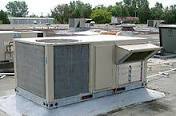
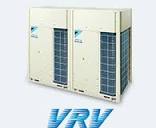
Another selling point is that you aren’t limited to using just one type of indoor unit. If you wanted to, you could have any combination of wall- and ceiling-mounted air conditioning units, along with an air curtain over the entrance.However, multi-split systems are slightly more complex and require more pipework than several single splits. That can make the installation more expensive and take longer, particularly if you’re only looking to install a few indoor units.Ultimately, the best solution depends on the layout of your building and the heating and cooling capacity you require.VRF stands for variable refrigerant flow, while VRV stands for variable refrigerant volume. It might seem confusing but they mean exactly the same thing.Daikin originally developed the technology, calling it VRV, but then protected the term to stop other manufacturers from using it. That’s why everyone else calls it VRF.VRF/VRV air conditioning is the best solution for medium to large applications, including hotels, retail spaces, larger offices and mixed-use buildings.
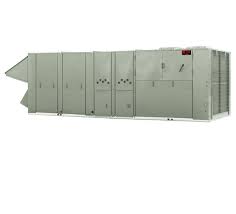
The systems are extremely efficient, reliable and easy to control, capable of meeting larger buildings’ complete heating and cooling requirements. They also come with reduced installation times, minimising disruption.There are two types of VRF/VRV system, heat pump and heat recovery. Heat pump VRF/VRV systems can provide either heating or cooling to a building at any given time, making them ideal for open plan areas.Heat recovery VRF/VRV systems are capable of providing simultaneous heating and cooling to different areas at the same time, making them perfect for buildings with lots of individual rooms. The most efficient commercial air conditioning systems, they recover waste heat from around the building, using it to heat other rooms and hot water. Heat recovery systems are also more flexible, as you have the option to heat one room while cooling another.If you’d like B-DACS to install one of these commercial air conditioning systems, give us a call on 0141 773 3355 to arrange a free site survey.