how to make an air conditioner with a fan

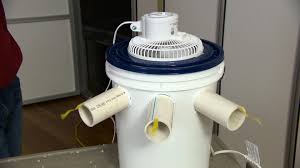
I recently saw this video of a floor fan converted into an air conditioning cooler. Ice chilled water in a bucket is sent by a pump through a coil attached to the front of the fan. The fan pushes air across the coils, exchanging the cold from the water to the air, and the water returns to the bucket to get cold again. It was really well done, but ended up with a bucket in one spot, the fan in another, and hoses and power cords stretched in-between. I wanted to build one that works on the same principals, but also looks nice in a home office. The whole thing needs a single footprint, so the fan will stand inside the container. Finding that container depends on your decor and a little hunting. I came across a fiberglass planter in a classical style that will go well in my place. You could use anything that’s big enough and will hold water, like a zinc bucket, a vintage milk can or a sleek, modern trash can. I had an old floor fan in the back of my shop I knew I could use.

It was in rougher shape than I remembered, so I disassembled it and replaced the stand with a 48-inch black pipe nipple and spray painted everything black. You won’t need to do this if you start with a better fan. Set the base of the fan in the bottom of the container. This will depend on what fan and container you use. My original plan was to trim the feet of the original stand to fit the bottom of the container and then screw it down. This would have worked if the rest of the stand was in good shape. Instead, I screwed a floor flange to the bottom of the container and then screwed the pipe to the flange. In any case, seal everything with caulk. Remove the safety cover from the fan and place the copper coil on top of it. The copper coil comes already in the proper shape. You just need to bend one end so it extends out from the center just past the outer coil. Starting from the center, secure the coil to the cover with zip ties. Use the flexibility of the coil to keep it even, so it spirals nicely out from the center to the edge.

When you get to the end bend the outer end of the coil to where you want it and cut it if you need to. In my case, I wanted both ends on the same side of the fan, but you could put them on opposite sides, or bend them around so the attachments are hidden. Put the safety cover back on the fan. You could have the power cords hang over the side of the container, but I wanted a cleaner look. To achieve this, drill a hole in the side of the container just large enough to admit the plugs for the fan and pump. If you’re lazy (like me) this will be about a 1-inch hole, but you could drill a much smaller hole if you take the time to cut the plugs from the cords and replace them after you pass the cords through. The smaller hole requires only caulk to seal it. I sealed the larger hole with spray foam. The pump itself determines the diameter of the plastic tubing and copper coil. My pump required 3/8-inch inside diameter so that’s what I used. Attach one end of the tube to the outlet of the pump and the other to the copper coil.
Secure the tube and coil connections with pipe clamps. Run another length of tube from the other end of the copper coil down into the container. The water will run up from the pump, through the coil and return to the container through the other tube. I placed 6 16-ounce frozen water bottles in the container and then filled it with water. Next time I fill it I'll use more frozen bottels and less water. Turn on the fan and the pump and the ice chills the water that circulates through the coil, bringing the temperature of my home office down to a level comfortable enough to actually get some work done.
cost of new air conditioner in car We can all agree that the worse part of summer is the unbearable heat.
small ac units for roomIn most parts of the world, summer brings along at least a few weeks of smothering heat and humidity and, for the most part, the entire season is that way.
fan in ac unit not working
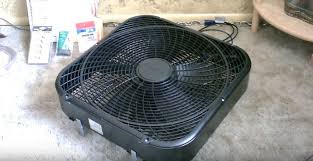
Even if you love the hot weather, air conditioning is essential in this intensely warm season. But what happens if you’re living somewhere that doesn’t have AC or what if your AC has just given out on you at the worst possible time? Well, suffer no more. You can MAKE your own air conditioning using a basic box fan that you can buy at just about any store. Watch the video below to see how you can create AC for little to no cost at all. Sound too good to be true, right? Air conditioning that you don’t have to pay a fortune for – yeah, right. While this may not be the central air conditioning you might be used to, it really is an efficient and functional way to cool your space down without spending an arm and a leg! The system works because of three separate parts: the copper coil, the ice water, and the basic box fan. The ice water is sucked into the copper coil which becomes freezing cold. The coil is attached to the box fan, which then blows out freezing air from the ice water in the coil.
If done correctly, you can create a mess-free cooling system for only a few dollars! All you have to do to keep up on your DIY air conditioning is replace the ice when it starts to melt away. Definitely worth saving all the money. Here’s what you’ll need to get started: Step 1: Lay out your box fan and start to slowly unravel the first copper coil on top. Step 2: Unravel the second copper coil. Zip tie both coils down. Step 3: Use the compression unit to connect the two copper coils. Step 4: Snip off the excess of the ties. Step 5: Attach the plastic tubing to the end of the copper coil. Step 6: Put the ice into a bucket and stick the end of the plastic tube into the ice water to get the cold air flowing. What do you think of this DIY air conditioning? Did this project work for you? Share your thoughts in the comments section below.High temps are breaking records left and right this summer. And if you don’t have central AC, your house is probably feeling like a sauna these days.

Enter your savior: the classic fan. This basic, inexpensive appliance can be the difference between misery and comfort, so don’t just set it down anywhere – maximize its potential! By using a few strategic tricks, your home will drop a few degrees in no time. Don’t thank us, thank your fan. Creating a crosswind is a refreshing one-two punch: you’ll get hot air out while also pulling cooler air in. The first step is to close up your house during the day – close windows, drapes, blinds, everything. You don’t want any sun-warmed heat getting in. Note: This will make your home darker, so if you’re partial to a lot of natural light, you may want to choose being warm over a dark room. When the sun sets, swing open your windows and grab two standard fans. Place one fan facing out of a window in the room you want the coolest. Then, use a second fan to create a strong flow of air towards that fan. Do this by setting up fan #2 so it’s facing inwards, and is either in front of a second window or pushing air into the room you’re trying to cool.

This setup will remove stale, hot air out and bring in fresh, cool air. This trick is all about getting hot air out. If you have tall windows (lucky you!) place your fan as high up as possible, facing out of the window. A shelf, ladder or stool can help with this. Remember, hot air rises, so the goal is to push as much hot air out of the house as possible. If you have a ceiling fan, switch the fan direction so that it moves counterclockwise instead of clockwise. That way, instead of blowing warm air around the room, it will push cold air down where it can be most effective. Be safe and make sure you turn the fan off before adjusting. Ceiling fan a little dirty? Read: Clean Your Ceiling Fans. Don’t have an air conditioner? This quick project will have you reaching for a sweater in no time. Place a standard fan on the ground (or as low as possible). Put a large bucket of ice directly in front of the fan. The fan will blow air over the ice, cooling it in the process. It may not be pretty, but it’ll keep you cool.