how to charge a residential ac unit
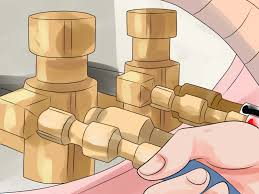
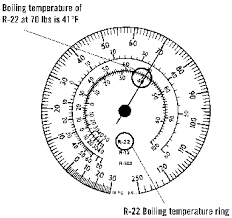
For many years residential air conditioners used pistons as metering devices, and you will still commonly encounter these systems. The piston looks like a small brass or bronze “bullet,” with a calibrated hole drilled through the center. The size of the hole, along with the pressure drop across the hole, determines how much refrigerant flows through the system. Most of the systems with piston metering devices are charged by the suction superheat method. Manufacturers of these systems typically provide a charging chart or slide rule to properly charge their systems. Sometimes these charts are available from your wholesaler. If you’re fortunate, they may be included inside the service panel of the unit that you’re servicing. Normally the charts will require an indoor wet bulb temperature reading as well as an outdoor dry bulb temperature reading. The indoor wet bulb reading reflects the total heat of the air and, therefore, the total loading on the indoor coil, both sensible and latent.
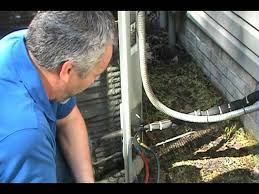
The outdoor dry bulb temperature will affect how well the system can reject heat to the outdoor air. In the case of the outdoor air there’s no latent heat involved. Once you determine the indoor wet bulb and outdoor dry bulb temperatures, check the manufacturer’s charging chart to determine the proper suction superheat. To measure suction superheat, attach your gauge manifold to the suction service port on the outdoor unit. Do not use the common suction pressure port on a heat pump because the pressure drop through the reversing valve will affect the pressure reading. Take the pressure reading and use a temperature-pressure chart to convert that reading to the saturated temperature of the refrigerant that the system uses. Note that most gauges have the commonly used refrigerants shown on the gauges. This is especially true of the newer digital gauges. Next, attach an accurate digital thermometer to the suction line near the suction gauge port. It’s usually best to insulate the thermometer probe so that it’s not affected by the ambient air.

The temperature that you measure should be warmer than the saturated refrigerant temperature. The difference between the saturated suction temperature and the measured suction line temperature is the suction superheat. Add refrigerant to lower the suction superheat. Recover refrigerant to increase the suction superheat. Note that you should never add refrigerant if the superheat is already 5F or less, even if the charging chart shows 0F.
ac outside unit fan not runningYou don’t want to overcharge the system if your thermometer or gages are not perfectly accurate.
cost of heating cooling unitOvercharging can damage the compressor and will also reduce both the capacity and efficiency of the system.
home ac units canadaNote that if the suction superheat is correct and the suction pressure is low, the system probably has low airflow.

Correct the airflow problem and check the charge again. On many newer systems, especially high efficiency systems, thermostatic expansion valves (TXVs) are used. Expansion valve systems are normally charged by using the subcooling method. Liquid sub-cooling is required so that you have only liquid entering the expansion valve with no bubbles present. Vapor bubbles present in the refrigerant will cause low refrigerant flow. Low refrigerant flow will cause a loss of capacity and efficiency in a cooling system. Liquid sub-cooling is normally measured at the liquid line service valve. The manufacturer will usually specify the required sub-cooling on the outdoor unit service panel. It’s usually between 5F and 15F, but always go by the manufacturer’s requirements. To measure liquid subcooling, attach your gauge manifold to the liquid line service port. If you use a quick-connect fitting on the end of your hose, make sure it’s a low-loss fitting. I’ve seen some quick-connect fittings that allow pressure loss, which can cause inaccuracies in the charging procedure.
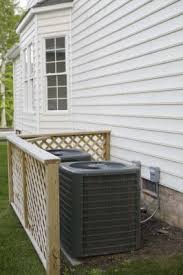
Take a pressure reading. Use a temperature-pressure chart to convert the pressure to the saturated condensing temperature of the refrigerant. Next, attach an accurate digital thermometer to the liquid line. The temperature that you read with the thermometer should be lower than the saturated condensing temperature. The difference between the measured liquid line temperature and the saturated condensing temperature is the liquid subcooling. Add refrigerant to increase subcooling. Recover refrigerant to reduce subcooling. Note that if the subcooling and superheat are correct, and the suction pressure is low, the system probably has low air flow. When charging by the subcooling method, you should be sure to check the suction superheat as well. If the expansion valve goes bad, you can have a very low suction superheat when you have the proper subcooling. In some cases it’s not possible to achieve the required subcooling without having a superheat of zero degrees. If you get zero degrees superheat with a TXV, then the TXV is defective and will need to be replaced.

One other method of charging is the weigh-in method. The weigh-in method can be very accurate if you know the exact length of the refrigerant lines. The outdoor unit usually comes charged with enough refrigerant for the outdoor unit, a standard indoor unit, and 15 or 25 ft. of line set. You must add refrigerant for any line length over what is specified by the manufacturer. You may also have to add or remove refrigerant depending on what indoor unit or indoor coil is used. Even if you charge by weigh-in it’s still a good practice to check the charge using the subcooling or superheat methods, to ensure that everything is operating properly. Kevin ONeill, CM, is the co-owner of ONeill-Bagwell Cooling & Heating, Myrtle Beach, SC. He has 35 years of experience in the HVAC service business and is a 28-year member of Refrigeration Service Engineers Society (RSES). WHEN SHOULD I DO FURNACE MAINTENANCE? The old adage is true: an ounce of prevention is worth a pound ofBelow you’ll find our Preventative Maintenance Checklist, which
is our proven method to keep your system in the pink and your home in For a system that heats and cools: perform maintenance in the spring and fall For cooling system maintenance only: perform maintenance at least once a year, before the cooling season For furnace maintenance only: perform maintenance at least once a year, before the heating HVAC PREVENTATIVE MAINTENANCE CHECKLIST Many dealers provide priority service for their customers who have an annual maintenance or service agreement. maintenance will ensure that your system runs as efficiently asYour local dealer will perform the following tasks, depending on the unit: Inspect unit for proper refrigerant level and adjust if necessary Clean dirt, leaves and debris from inside cabinet Inspect base pan for restricted drain openings—remove obstructions as necessary Inspect coil and cabinet—clean as needed Inspect fan motor and fan blades for wear and

damage—on older models lubricate as needed Inspect control box, associated controls/accessories, wiring and connections. Controls may include contactors, relays, circuit boards, capacitors, sump heat and other accessories. All control box and electrical parts should be checked for wear or damage. compressor and associated tubing for damage Inspect and clean blower assembly (includes blower housing, blower wheel and motor) On older models, lubricate motor and inspect and replace fan belt if needed Check combustion blower housing for lint and debris and clean as necessary Inspect evaporator coil, drain pan and condensate drain lines. Clean as needed Inspect for gas leaks in gas furnaces Inspect burner assembly—clean and adjust as needed Inspect ignition system and safety controls—clean and adjust as needed Inspect heat exchanger or heating elements Inspect flue system—check for proper attachment to the furnace,
any dislocated sections, and for signs of corrosion. Inspect control box, associated controls, wiring and connections Clean or replace air filters Inspect conditioned airflow system (ductwork)—check for leaks WHILE YOUR SYSTEM IS OPERATING Monitor system starting characteristics and capabilities Listen for abnormal noise Search for source of unusual odors Monitor air conditioning and heat pump systems for correct refrigerant charge Measure outdoor dry bulb temperature Measure indoor dry and wet bulb temperature Measure high and low side system pressures Monitor gas furnace for correct line and manifold gas pressure—make adjustments as needed Measure temperature rise and adjust airflow as needed Check vent system for proper operation Monitor system for correct line and load volts/amps Monitor system operation per manufacturer's specifications Provide system operation report and recommend repairs or replacement as necessary NOTE: Trane recommends
all maintenance and service work be performed by a professional air conditioning and heating dealer that holds the appropriate credentials to install and service air conditioning and heating a Trane Comfort Specialist near you HOW CAN I GET THE MOST OUT OF MY TRANE HEATING AND COOLING SYSTEMS? systems are designed to provide optimal efficiency and comfort. it’s time to do the same to your home. Here are some things you can do around the house to optimize the operation of your system, as well as the comfort inside your home. MAINTENANCE Set the thermostat as high as comfort willMake sure attics are adequately ventilated to relieveIf necessary, improve airflow by adding or enlargingWhen building a new house or renovating an old one, choose light-colored roof shingles to reflect more of the sun'sDuring moderate weather, don't use the air conditionerDraw blinds or drapes to block the sunlight during the hottest part of the day.

windows exposed to direct sunlight. In the cooling season, don't run kitchen and bath exhaust fans longer than necessary. Don't place lamps, TV sets or other heat-producing devices beneath a wall-mounted thermostat. Rising heat from that equipment may cause the air conditioning system to overcool your house. HEATING & FURNACE MAINTENANCE Locate the thermostat on an inside wall away from windows and doors. thermostat as low as comfort permits. Each degree over 68°F can add 3% to the amount of energy needed for heating. So lower the thermostat a degree or two when expecting a large group of guests. sure your home is properly insulated. This is the single most important step in conserving energy. Thermal insulation should be specified in terms of thermal resistance (R-values). is recommended for ceilings, and R-11 (3-1/2”) for exterior walls and floors over unheated areas. In colder climates, considerInfiltration of humid outside air is
your heating and air conditioning system's worst enemy—it could account for 15% to 30% of air conditioning energy requirements. the places where air can sneak into the home and plug them with caulking, weather-stripping or plastic. caulk around all entrance doors and windows. transfer through your windows by 40% to 50% with double-glazing (two panes of glass separated by a sealed air space) and low-eUse wood- or metal-frame storm windows even if single-glazed windows are high quality. The extra layer of glass and the layer of still air will cut heat transfer considerably. Install storm doors at all entrances to your house. Keep all windows and doors closed. increasing the glass area, you increase the amount of heat added in summer and lost in winter. Make sure fireplaces have tight-fitting dampers, which can be closed when the fireplace is notInvest in a humidifier to conserve energy in winter. in your home won't be as dry, so you stay comfortable at a lower