ac history units year 4

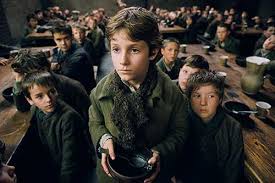
Year 4 First Fleet Activity 1: Life in 18th century Britain Focus question: what was life like in England 250 years ago? Show students excerpts from the film Oliver Twist (2005 / Ronald Harwood, screenplay / Roman Polanski, director) to answer the question: What was life like in London at this time in history? Discuss living conditions for the poor in London, as depicted in the film. Why might many people have resorted to crime? How did those in authority deal with misbehaviour? Discuss the value of this film as a 'historical source'. Ask students to suggest possible primary sources (drawings, letters, court records etc) that might provide more useful 'evidence' for further investigation of this topic. Students use the Chronology (PDF, 104 KB) exercise to sequence events leading to British settlement in Australia, exploring cause and effect. Use the events shown in the Chronology (PDF, 104 KB) exercise to create a classroom timeline. Can students identify relevant aspects of the film to answer the inquiry question?
Can students explain a sequence of events based on likely cause and effect? AC History Units presents 8 units developed by the History Teachers' Association of Australia to support teachers in the implementation of the Australian Curriculum: History The development of these units has been guided by a number of ideas: Unit 1, Teaching History, is a foundation unit, providing a brief introduction to the discipline of history. It 'unpacks' the skills and concepts, surveys approaches to teaching and provides an essential framework for the other units. Units 2-8 focus on topics relevant to particular year levels and are designed to provide very practical support in the form of teaching programs, sample 'learning sequences', a wide range of resources and assessment ideas. A learning sequence is a sequence of lessons (as opposed to separate learning activities) designed to give students an opportunity to develop skills and understanding in some depth. At the end of a learning sequence students should be equipped to demonstrate their learning by completing a substantial task, appropriate to their year level.

While there is consistency in the presentation of the units, no attempt was made to impose a particular teaching approach. A variety of valid approaches to teaching history is presented. It is expected that these units will be used in different ways. Some teachers may put the programs and learning sequences to immediate use. Others may use the material more selectively. A particular feature of the units is the range of quality resources that have been developed – many will be easily adapted or put to wider use. A major goal has been to provide the conceptual background (in Unit 1) and concrete examples (in Units 2-8) to assist teachers in designing their own programs and learning sequences for other topics and year levels.1788: Was life the same for everyone? Image from back cover of Fair Dinkum Histories: Grim Crims and Convicts by Jackie French and Peter Sheehan, Scholastic Press, reproduced with permission This unit closely examines a range of texts, to help the students develop an understanding of how texts, including multimodal texts, are created using linguistic, visual, audio, gestural and spatial design systems to create meaning.
The unit complements a historical inquiry around the experiences of the early settlers and contact with Aboriginal and/or Torres Strait Island peoples. Duration and sequence pathways: The unit is divided into 12 sequences that can either be undertaken consecutively or on a discrete basis. See a list of resources used in each sequence, plus additional teaching resources.
large home ac units Australian Curriculum: English Year 4
do air conditioning units need water Sequence 1: Finding out what we know
what is the price of a new air conditioning unit Sequence 2: Exploring an informative text: Avoid Being a Convict Sequence 3: Exploring the text: Captain Arthur Phillip and the First Fleet Sequence 4: Exploring the text: Grim Crims and Convicts
Sequence 5: Analysing and comparing literary and informative texts Sequence 6: Looking at the language: Nanberry Sequence 7: Creating our own informative text Sequence 8: Viewing texts from the past Sequence 9: How history can be presented in film Sequence 10: Examining online informative text Sequence 11: Exploring historical narrative in multimodal texts Sequence 12: Creating our own historical narrative How Cross-curriculum priorities relate to this unit This unit of work is closely linked to the Cross-curriculum priority of Aboriginal and Torres Strait Islander histories and cultures. The aim is for the students to continue to develop respectful critical understandings of the social, cultural and historical contexts of Aboriginal and Torres Strait Islander histories and cultures. This will be facilitated as they examine a range of texts and consider missing or limited points of view presented in texts in Sequences 2 and 3; how stories can be changed and how we must question and examine our history closely in Sequence 8;

and learn about early contact and its consequences in Sequences 4, 10 and 11. In Sequence 10, the students will specifically examine an online text that presents an Aboriginal and Torres Strait Islander perspective of events before and after the First Fleet arrived. The unit does not explicitly link to the Cross-curriculum priority of Sustainability, but this can be examined and questioned with the students as they examine texts that discuss the impact of the early settlement. Because of the focused historical time that this unit examines, the Cross-curriculum priority of Asia and Australia’s engagement with Asia is not relevant. However, all activities could be adapted to texts that engage with both these priorities. How General Capabilities relate to this unit This unit has a strong focus on Literacy, as texts are critically assessed and writers’ bias and intent are questioned in Sequences 2, 3, 4 and 5; historical records are examined in Sequence 8; and writers’ design choices are explicitly identified in Sequence 5, 6, 9, 10 and 11.

The Numeracy capability is highlighted through the students’ use of graphic organisers throughout the unit to examine relationships between different components of multimodal texts. Critical and creative thinking is integral to activities in Sequences 2, 3, 4, 5, 8, 9, 10 and 11 as students closely examine texts to identify points of view, opinions and unstated assumptions. Opportunities to develop Personal and social capability are presented through group activities in the unit, particularly in Sequences 7 and 12. The students’ Ethical understanding and Intercultural understanding are developed over the unit as they study texts that explore the events and consequences of the past. In Sequences 8, 9, 10 and 11 the students will interpret digital texts and in Sequences 7 and 12 they will use Information and communication technology as they create multimodal texts, through digital publishing. Curriculum summary for this unit: This summary table provides links to the Australian Curriculum: English Year 4 content descriptions across the three strands of literature, literacy and language and sub-strands, with links to relevant elaborations, sequences and activities.